I have two old acquaintances from high school that I've ceased to stay in touch with, but thanks to facebook I still receive constant updates about them. Most of these posts have to do with what dumb thing Rick Santorum said last, who is fighting abortion rights, which type of chard is best, etc.
Recently, both, or at least their internet selves, have become actively involved in the anti-GMO movement. This debate comes up regularly at the FJH and I've often threatened to express my dissenting opinions on the blog. Today is the day, and without further ado (or research) I shall express my opinions on the topic:
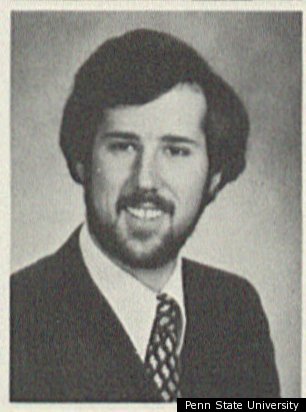 |
| Rick Santorum |
 |
| Chard |
Recently, both, or at least their internet selves, have become actively involved in the anti-GMO movement. This debate comes up regularly at the FJH and I've often threatened to express my dissenting opinions on the blog. Today is the day, and without further ado (or research) I shall express my opinions on the topic:
As with anything in our food industry, when the opportunity to provide and consume cheap food presents itself, consumers and suppliers are generally eager to partake. The burden of this cost is placed on the quality of food and the environment. If you read the NYTIMES article I posted on the myth of sustainable meat you might agree. What most in the house took away from the article was as with anything, consumers really make the final call in the quality and costs of their food.
The same can be said for GMOs. I truly believe nothing about a genetically modified organism is inherently bad, it is only the motivation behind making one that is 'evil' or whatnot. I've come to this conclusion mostly through my biology education. 'Genetic modification' happens constantly, in our own bodies and in
agriculture. It is in every sense of the word, 'a natural process.' I understand that most people's concerns are over human involvement in this process. However, every crop we eat today has had its genetics modified by humans. The domestication of wild plants into harvest-able crops was one of the main factors in the transition to sedentary human populations. The ability to domesticate crops comes from our ability to select for mutations in genomes.
Ben "the Best" Tuthill, or as I like to say, "Ben 'the Highly Uninformed about Genetically Modified Organisms' Tuthill," has convinced himself that GMOs cause cancer. He is absolutely right, because everything causes cancer. Every chemical has the ability to interact with DNA and cause a permanent change to the genetic code. So in this regard, yes, GMOs are carcinogens. Are they what we should be most concerned about? Well, when one considers research like the China Study it becomes obvious that non plant based products are one of the worst things we can consume in terms of cancer. The research so far shows the risks of cancer to be much higher from meat and dairy products then from GMOs. (I would bring up pesticides, but I assume if one is anti GMO they are probably anti pesticide too).
Professor Giovanni Saarman has brought up the threat of GMOs becoming invasive species. This is also a concern of mine, and I don't really feel like defending GMOs here. However, invasive species are everywhere, almost everything we eat today is technically invasive. Also, just because you have a tangerine mixed with an orange doesn't mean it has this amazing ability to now thrive in Montana and displace natural species. We are modifying these plants to be easier to harvest, not so that they can compete with native species. (I understand this is not a well thought out argument)
There are also some benefits I think are ridiculous: disease resistant crops. It is unrealistic to think we can modify our crops to keep up with parasites. Bacteria have gone through more mutations in the last 6 hours than we have since we left the monkeys. If we really want to protect against disease then having a variety of species of the same crop is the way to go. However, I don't see any reason GMOs should not be included in this. Having a variety of heirloom species growing alongside GMOs gives us more variety in our crops, which in my opinion, is a good thing.
 This gets back to my original point: its all about striking a balance. GMOs are really interesting and exciting, but as Monsanto has proven they can be used for some less than righteous means. Can we rely on them for the future? No, of course not. Lets rely on plants that have stood the test of time. However, we should also let human ingenuity and curiosity work towards bettering our agriculture.


