1/15/12

THINGS LA SHOULD HAVE: Seward Co-Op, Minneapolis

SoCal is supposedly into hip things and health food and stuff like that.  Didn't they invent Trader Joe's?  Aren't they all yuppies who do yoga and eat frozen yogurt?  Isn't Los Angeles a capital of FOOD and HEALTH JUSTICE?

NO.  Even though Los Angeles votes for democrats sometimes, they don't even have CO-OPS.  What is a CO-OP?  A co-op, or cooperative, is a business owned and operated by a group of people or community for their mutual benefit.  Co-op grocers usually sell local and organic products, and care about consumer health and environmental sustainability.  What is more FOOD JUST than that?  Very little!  Growing up in St. Paul, MN, generally regarded as one of the best places in the world, I assumed that co-ops were a common fact of life.  This isn't true.  In fact, there is only one co-op, Santa Monica's Co-opportunity, in the entire LA area.  What's up with that, SoCal?  I'd think you'd be into natural food markets.  I thought you were the most liberal state in the world.  You even voted for Mondale in '84...oh wait, you didn't.

In Minneapolis and St. Paul, we have not one, not two, not three, not four, not five, not six, but SEVEN co-ops.  They are all neat, but the one I'm most partial to is Seward Co-op in Seward, Minneapolis.  Only about a mile and a riverspan away from my house, my family have been members since Seward got trendy and opened their new Franklin Avenue space in 2005.  Seward is an awesome place...come with me as I check it out.
 Seward sells, whenever possible, produce that is local and in-season.  Though they make some exceptions, they almost never sell non-organic, non-USA-grown fruits or vegetables.
 What's that nasty looking brown thing in the lower right, Seward?  Who knows?  They're always selling things I've never heard of.
Ma "The Best" Tuthill pretends to weigh her mushrooms in order to make a more interesting picture.
Things don't have to come prepackaged?  WOW!  Seward has an infinite number of bulk options, including oils, cleaning supplies, tea, spices, and the best vanilla oat-cluster cereal I have ever had.  I don't understand why everywhere in the world doesn't do this.  It's cheaper, greener, easier, and let's you know exactly what you're getting when you buy your food.  Why is there so much evil in the world?
Peanut butter comes from peanuts!  This is probably the coolest thing at Seward.  I had no idea the process was so simple.  Seeing this makes things like Skippy even more terrifying than they already were.
  
Meat JUSTICE.  Brat JUSTICE: maybe the rarest type of JUSTICE. Maybe the best type of JUSTICE.
 Herban Cowboy, an awesome mens' (and now womens'!) grooming line, deserves a post of its own.  Seward's grooming section is filled with other great products as well, including the nearly impossible-to-find Burt's Bees lip balm circular tin. 
Seward's hot deli is fantastic too, and make one of the best burritos in the Twin Cities.  This isn't saying much, but if I were to rate it on a scale of good to great, I would give it a muy bien.

Short summary: Seward is awesome!  Co-ops are awesome!  Get on it, LA!  What are you doing with your life?  We had a state shutdown and two failed Republican candidates, and we have seven of them in a twenty mile radius! You guys passed the Dream Act!  You elected Jerry Brown!  Surely you can pull together a co-op or two...

Oh, neat!  Arroyo Food Co-op, founded in 2008, is trying to get enough membership donations to get a store opened somewhere in Pasadena.  This project has a lot of potential, and FOOD JUSTICE HOUSE advocates for their cause.  We encourage anyone who's interested in what they see here to join the fight toward a better LA, a better, California, and a better world.  Co-operative food: It's JUST the right thing to do.
Fight on!

-Ben "The Best" Tuthill

1/11/12

MENSWEAR JUSTICE: Pitti Uomo 81

Certain annual events make life go by so fast...state of the Union addresses...the Grammys...fashion weeks...is it already time for another Pitti Uomo?  It seems like just yesterday that made-in-USA-all-star label Band of Outsiders was taking center-stage at Pitti 80...

It doesn't look like Scott Sternberg and crew are making a showing this season, but keep an eye out for American-made heroes Wolverine, Red Wing Shoes, Alden, Jack Spade, and Woolrich Woolen Mills...pretty soon it will be time for another set of F/W shows...and another State of the Union...time keeps passing...what does the future bring?...what is the future of FOOD JUSTICE?...what is the future of me?

1/10/12

Tea of the week: Namring Upper Estate, 1st Flush Darjeeling (FTGFOP1)

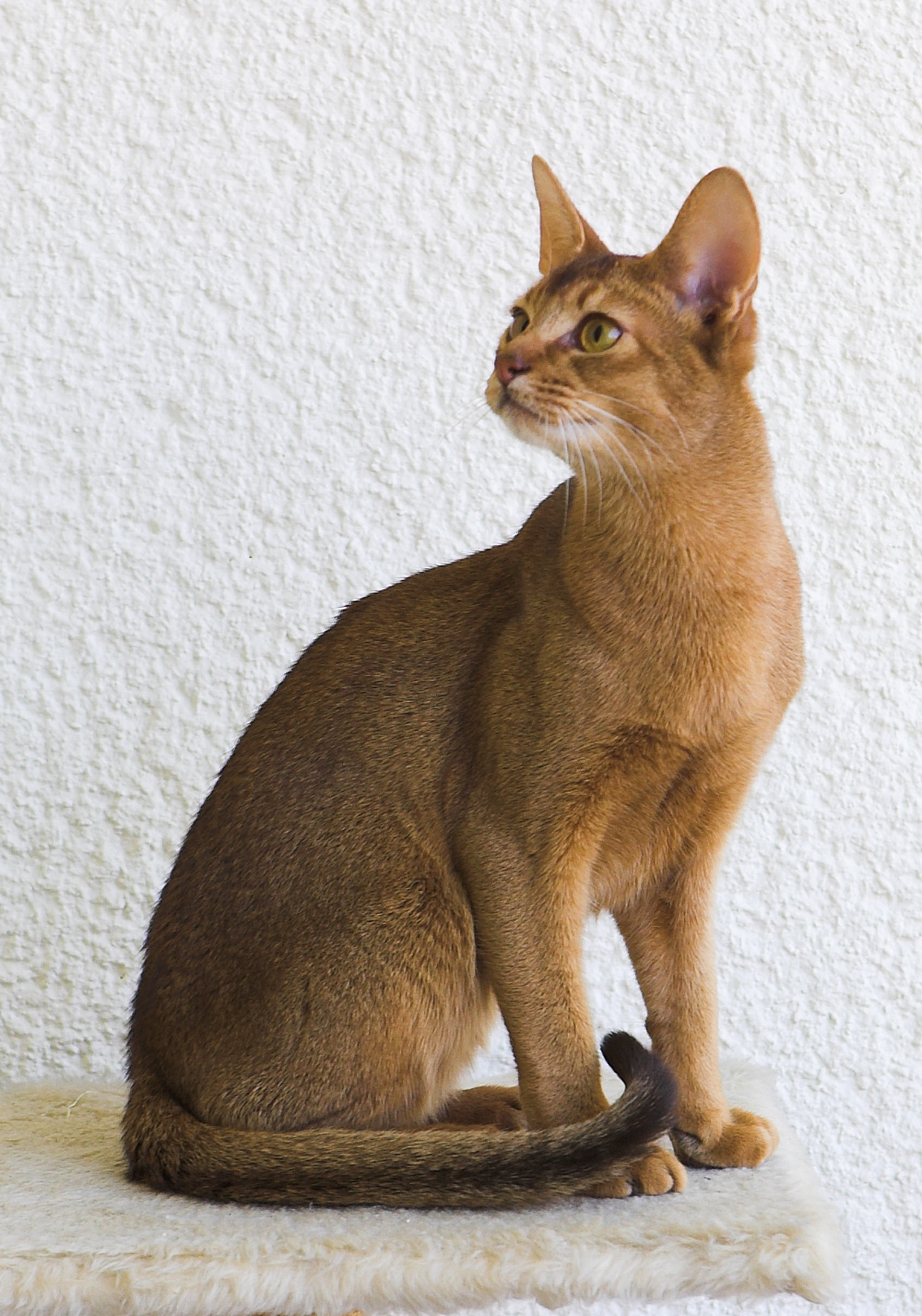
Second flush Darjeelings are the blue Abyssinians of tea: delicate, full of history, and slightly mysterious.  First flushes, then, are your typical ruddy: everything wonderful about the second flush, but with a relatable, worldly edge.  I prefer the muscatel intricacy of the second, but a strong first is an entirely different experience, and with all the hype 2011's Upper Namring's been getting, I had to try it out.
 
I wish the picture did justice to the color of the leaves of this one, because they're really quite nice: very green, almost like an oolong.  The liquor is lovely too, a bit darker than what I'm used to.  The aroma, from leaf to cup, is strong but unmistakably Darjeeling.  From start to finish, you know exactly what you're getting with this one.
The flavor kicks immediately.  There's no way to really explain Darjeeling until you've tasted it.  It's brisk, it's complicated, it's wild, it's refined.  The Namring has none of the muscatel taste prominent in second flushes, but it makes up for the absence in sheer volume and fullness.  It comes off almost a bit too harsh: it forces itself on your palate, and quickly takes over your entire mouth.  This is not a subtle tea in any way.  If you like Darjeelings but have always found them too delicate, this is the tea for you.
Personally, if I'm in the mood for a strong afternoon cup, I'd rather have a good Nilgiri.  This first flush is just a bit too much for me.  I like it, but it's too forceful for my taste.  I want this sort of kick in the morning, not at tea time, and Darjeeling just doesn't feel right to me before noon.  The astringency is a bit much to deal with as well; one has to expect a bit of a tight mouthfeel from Darjeeling, but the Namring almost makes my throat feel dry.  I'm not saying it's at all a bad tea -- on the contrary, it's quite good --it's just, at least for me, not quite what I need.

This one was going strong after two steeps, and I wouldn't be surprised if it lasted for three or four.  A bit about Namring Estate here (and an awesome blog to check out otherwise, if you're interested in this sort of thing).  A lot of people are selling 2011 Namrings; I got mine from TeaSource.   

-Ben "The Best" Tuthill

1/4/12

MENSWEAR JUSTICE: Shelter Half

Menswear shops featuring giant American flags seem to be becoming a bit of a thing, and the (temporary?) made-in-the-USA shop Shelter Half furthers the trend with its new South La Brea storefront.  Already featuring Union and the newly opened Unis outpost, the 100-block of S La Brea is quickly becoming the coolest street in LA (after Stratford Rd. past 49th, of course).  FOOD JUSTICE HOUSE will definitely be making a trip once we get back to California.  Photos via ACL.

1/3/12

Tea of the week: Nonaipara Estate, 2nd Flush Assam (SFTGFOP1)

Welcome to our new section, Tea of the Week.  If I were to pick five things that were good, they would be cats, baseball, Berlin, FOOD JUSTICE, and tea.  Tea is the best drink in the world.  Some people compare tea to coffee: this is an okay comparison, but not really, because tea is very different.  It is healthier, subtler, and nicer to look at.  In the end, all coffee tastes essentially the same.  There are good beans, good roasts, good preparation, but ultimately it's all the same thing.  Am I right?  I don't actually know, I've never really had a full cup of coffee.  Sound off, coffee drinkers!

Anyway, tea is an incredibly varied, and, if it's good, intricately complex drink.  Wars have been fought over it, cultures have developed around it.  It is a drink with history, and that history continues to this day.  Tea: a cool thing to drink!

On Tea of the Week, we will profile a new strain of high grade tea every week.  This will be lots of fun, and I'm sure we will all learn something.  Get your strainers ready, people: we're off for a smooth ride!
BUT FIRST, A QUICK INTRODUCTION!

What is tea?  Some people think tea is anything that hot water is strained through.  My stupid friend Harry once said that coffee was a type of tea (he was wrong!!)!  In truth, tea is only one thing: a drink made from the leaf of the Camellia sinensis plant:
There are four common types of tea: black, oolong, green, and white.  All of them come from the same plant; the difference lies in how the leaf is prepared.

Black tea is highly oxidized (what does that mean?  Some help please, Chem majors!) leaves.  Black tea leaves appear dark, shriveled, and dry.  Black tea is the strong, dark, caffeinated drink most people associate with tea. 

Green tea is only minimally oxidized.  Green tea leaves are generally larger, and greener.  I don't like green tea and don't think about it very much.  It is a subtler, less caffeinated drink, and generally made from Chinese leaves.  People seem to think green tea is healthy; this is probably true.

Oolong tea is oxidized to a level between green and black tea.  As a result, it tastes like something between green and black tea.  I like it more than green tea and less than black tea.  I would call it the Joe Lieberman of teas, except not really.

White tea is very minimally oxidized, and made in a different process than green tea.  It is the most delicate tea, and maybe the most rewarding.  White tea leaves are big, full, and generally light colored.  If I were to describe white tea without fear of being beaten up by people who think describing tea is lame, I would call it delightful.

Unless you are dealing with people who are stupid/have more interesting things to think about, tea is generally referred to by the region where it was produced.  Some common tea regions are: Assam (known for strong, breakfast teas), Ceylon (aka Sri Lanka, known for light, almost citrus-y teas), Darjeeling (the Champagne region of teas), Keemum (a dark Chinese tea).  

Anything else that people call tea is not actually tea.  People often refer to some drinks as herbal teas, but usually they are neither herbs or teas.  If you want people to not like you, you can tell them that they are actually drinking tisanes.  I told this to my stupid friend Harry and he told me that to do something unpleasant and rude.  I felt sad but correct.  Common types of herbal tea are rooibos, or African Red Bush tea, chamomile, which is made from flowers, and some other things which are pretty obvious.  Herbal tea is nice but not that interesting.

If you find all of this fascinating as I do, you can check out the Wikipedia article on tea processing, which is filled with detailed information about how each type of tea is prepared. 

One last thing.  There are a lot of acronyms in the tea trade.  The one you will most commonly see is in reference to the tea's grade, or quality.  This is based around the Orange Pekoe system.  OP stands for Orange Pekoe, which means "standard, full leaf."  From that, we get things like:

BOP: "broken orange pekoe," standard leaves, but cheaper because they are broken.
FOP: "flowery orange pekoe," pretty good, longer leaves.
FTGFOP: "finest tippy golden flowery orange pekoe," or "far to good for ordinary people," the best, fullest leaves.
STGFOP1: "special finest tippy golden flowery orange pekoe 1," even better than the best.    

Anyway, there's a quick introduction.  Now let's talk about the Tea of the Week...

NONAIPARA ESTATE, 2nd Flush Assam (SFTGFOP1)
 I've been looking for a strong breakfast tea for awhile now, one with the complexity of a Darjeeling in addition to the solid maltiness one comes to expect from Assams.  I'm content with a simple Keemum, but I've been searching for an intricate Assam to compliment it.  The Khongea Estate strain of last year was incredible, but didn't have the heartiness I'm looking for in the early morning.  This 2nd flush Nonaipara, however, just might do the trick.
The Nonaipara doesn't have the thick, malty taste of a simpler Assam (such as Tao of Tea's competent Malty Assam), but it's undeniably hardy.  The rich smell of the unsteeped leaves are indicative of the flavor: this is a warm tea, filling without a harsh kick.  It isn't too astringent, and takes milk well.

What makes this tea truly extraordinary, however, is its sweet, almost chocolate undertones.  The smell of cocoa is prominent in the brewed leaves, and the taste comes through in the end of the sip.  It leaves a lingering richness, in many ways akin to that of a dark hot chocolate.  Without this undertone, this would be an unexceptional tea, fairly simple and not even notably malty.  However, the strength of its cocoa aroma and taste makes it an interesting addition to anyone's breakfast selection.  I don't see it becoming a staple of my collection, but I could hardly think of a more pleasurable tea for this time of year.
This tea is good for two steeps, but begins to loose flavor by the third.  You can purchase it from the TeaSource online store, or, if you're in the Twin Cities, pick up a bag from their store in Highland Village.  There doesn't seem to be much information about Nonaipara Estate, except that they seem to have a bit of an elephant problem.  I can't really relate.


-Ben "The Best" Tuthill