Showing posts with label tea. Show all posts

6/13/12

Tea of the week: Harmutty Estate Assam (SFTGFOP)


Ben: Well Sylvia, it's been awhile, but I think it's time for another tea of the week.

Sylvia: Oh, I think you're right Ben.  We've had so many interesting teas in the past month, it seems such a shame that we aren't sharing them with the rest of the world.

Ben: You've got that right.  Which one should we profile?

Sylvia: How about the Harmutty Esate Assam?

Ben: You mean, The Breakfast Tea of My Dreams?

Sylvia: That's right; the SFTGTBT.

Ben: Don't you mean SFTGFOP?

Sylvia: No, I mean SFTGTBT: Super Far Too Good To Be True.

Ben: You've got that right!  This Harmutty Estate Assam is absolutely incredible.  I've been looking for something this strong for ages; a malty heaviness on par with Tao of Tea's Malty Assam, paired with the hearty flavor of a good Nonaipara.

Sylvia: Well, I wouldn't go that far.  It doesn't have quite the complexity and unique cocoa overtones of a Nonaipara...

Ben: Okay, okay, but it's definitely much more flavorful than Tao's Assam.  It's forceful, and oh so rich.
Sylvia: I'd call it a simplified Baihao Yinzhen.


Ben: Interesting.  Simplified, then multiplied by 1,000.

Sylvia: Compacted into a heavy-weight punch.

Ben: Speaking of boxing, I heard NDK's been spending time with Manny Pacquiao...

Sylvia: He's certainly been in the Philippines for awhile.  I hope he's taking good pictures with that camera he took along with him, otherwise we'd be snapping shots of these absolutely beautiful leaves.

Ben: The ad shot from Chado will have to do.  What a shame.

Sylvia: Let's talk about Harmutty Estate itself though.  I know that I know nothing about it.

Ben: I wish I could help you out here, Syl, but I've got nothing.

Sylvia: Hmmm.  Well, I'm sure they're FOOD JUST.

Ben: One can only hope.

Sylvia: So how would you rate this one overall?

Ben: What can I say?  It's not subtle, it's not intricate, it's not thought-provoking.  But who wants all of that in the morning?  This is far-and-away the strongest, maltiest, most flavorful breakfast tea I've had in ages.  I can't think of anything better to get me started on my charge through the daily grind.
 
Sylvia: Well said.  I'm usually a bit sluggish in the morning, but this Assam has me wide awake like I haven't been in years.  I can really feel the heartiness in my bones.  I'm buzzing all over.  I almost feel like I could fly.

 Ben: Don't be ridiculous.


Pick up a bag of Harmutty Estate Assam at any the Chado Tea Room in Pasadena.  These guys are good; the staff knows their tea and are super helpful, and at $3 an ounce, you aren't going to get a better bang for you buck.  We'll be back next week with even more incredible breakfast teas!

4/10/12

Tea of the week: Bai Mudan


I've recently realized that I'm lost in life, and that, in order to find my center, I need to refocus and put everything into perspective.  For this reason, I've become a Taoist.  Taoism is based on the philosophy of Lao Tsu, a Chinese hermit from very long ago who wrote a book called the Tao Te Ching.  I don't really understand the Tao Te Ching, but it's so calming, and it helps me find peace in this crazy hustle and bustle LA world.

 
Lao Tsu is always talking about something called the Tao, but he won't ever explain it.  Whatever it is, it's something very nice and and soothing: something like Bai Mudan Tea.  Also known as White Peony, Bai Mudan is one of the two most famous varieties of White Tea (the other one being the legendary Silver Needles).  White tea is the subtlest of the teas; at first taste it may seem a little bit bland, but once you discover its intricacies you're in for a magical ride.  It's a bit like oolong without the woodiness, a bit like green without the bitterness, a bit like water without the wateriness.  It's an a rich and delicate drink, fit for both a king and a Zen master: the perfect embodiement of the Tao. 


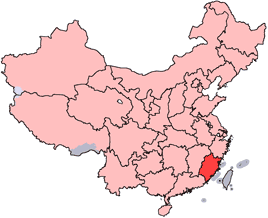
Bai Mudan comes from the Fujian Province of Southern China.  It lacks the almost incomprehensible complexity of Silver Needles, but it makes up for it with raw flavor and punch.  It's the perfect after-dinner tea for powering through a heavy workload.  It's energizing, but simultaneously soothing; a little flowerly, a little earthy, a little enlightened.  It relieves stress without making you too sleepy to keep working, and it wakes you up without making you feel too frenetic.  When I drink Bai Mundan, I feel as if I'm one with my studies.  I can accept my responsibilities and move forward in peace and contentment.


As the Tao Te Ching says:

Music or the smell of good cooking
may make people stop and enjoy.
But words that point to the Tao
seem monotonous and without flavour.
When you look for it, there is nothing to see.
When you listen for it, there is nothing to hear.
When you use it, it is inexhuastible.

Wow, it looks I need to do some meditating. . .and you can bet that I'm going to do it with a warm cup of Bai Mudan!


I got my White Peony from TeaSource, but you should be able to find it at most good tea shops (including FJ HOUSE'S new LA favorite, Chado Tea Room).

4/3/12

Tea of the week: Szechwan Imperial Keemun


If there's one thing I hate more than monkeys, it's things that are made in China.  Buy American!  But even I have to admit that the Chinese make some things really well, and one of those things is Keemun tea.  Assam may be India's best region for breakfast tea, but the Qimen county of China's Annui province gives it some stiff competition.  Keemun (a Western bastardization of Qimen) tea is known for its fruity maltiness, and it's often used in higher quality breakfast blends.  It often gets compared to burgundy wine; who knows what that means?  Not me!


YerbaMateLover and I had been drinking TeaSource Grand Keemun for breakfast for awhile now, but we were starting to go insane due to the lack of variety.  To mix things up, we got a few ounces of Szechwan Imperial from Pasadena's Chado Tea Room (by far the best tea shop I've been to in LA).  Boy is it good.  Szechwan is the keemun-iest keemun I've had yet: intensely malty, richly plum-like, and capped by that weird Keemun taste that can't really be described unless you've had it.  It's an intense flavor experience that can't be taken lightly.  I'd go crazy if I had to drink it every day, but as an occasional breakfast treat it's a true delight.


Is Szechwan Keemun from the Szechwan province of China or from Qimen County?  I don't know; there seems to be some sort of contradiction here.  Geography majors?  Either way, it's fantastic tea.  I've gotten mine to last four steeps: it starts to lose its maltiness after the second, but it retains a light flavor that's perfect for the afternoon.  Have it with or without milk: milk cuts back the wildness of the flavor, which could be a good or bad thing depending on your mood.

#NOM!

You can get Szechwan Imperial Keemun by the ounce at any of Chado Tea Room's three locations; FJ HOUSE advocates for the Pasadena shop, located at 79 N. Raymond Street in Pasadena. 

-Ben "The Best" Tuthill

1/25/12

Tea of the week: Glendale Estate, Nilgiri Frost Tea

Amidst the dissatisfaction that the Namring Darjeeling was bringing around, Sylvia reminded me of an old friend: Glendale Estate's Nilgiri Frost Tea.  How could I have forgotten?  All of my issues with the Namring are absolved in this Nilgiri, which takes the strong flavor of the Darjeeling and pairs it with a fullness typical of an Assam, but without the malty weight.  The result is a perfect cold-day afternoon tea.

Glendale's Nilgiri is called Frost Tea because their estate is high enough in the mountains for the leaves to frost over in the winter.  This supposedly gives the tea an interesting flavor (something to do with "cell component concentration." What do these words mean, scientists?  Sound off!).  I believe it, because Glendale's Nilgiri is interesting!  There's a taste of Darjeeling-like wildness at the center of its flavor, supplemented by a slight spicy kick and a sweetly smooth finish.  It's full, but quite light, not as breezy and fresh as Darjeeling, but just as nice.  Better yet, it has none of the harsh astringency of a strong Darjeeling; this isn't to say that there's no astringency, but it's negligible in comparison to the smooth overall mouthfeel.  It's an invigorating tea, but in an afternoon way: it calms you down, centers you, and pushes you along with your day.
Glendale Estate (in the Nilgiris district of Tamil Nadu, a state in southern India) is a pretty big operation, and their website has tons of information about who they are and what they do.  They aren't organic, but they do claim to make an effort to reduce pesticide use, and they're into giving back to the community through estate hospitals and schools.  They also provide tours and extended plantation stay vacations, so I can't imagine they're doing anything too evil.  It looks absolutely gorgeous:
I got my Glendale Frost from TeaSource, but they're unfortunately not selling it anymore.  You can get the Orange Pekoe from Tea District.  Fun Fact: Glendale's SFTGFOP was named the most expensive tea in the world (selling for $600 a kilo) in 2007.

-Ben "The Best" Tuthill

1/17/12

Tea of the week: Dong Fang Mei Ren, Formosa Oolong

It's four in the afternoon, and we're on the sixth steep of Dong Fang Mei Ren.  "It just keeps going!" says Sylvia, my imaginary friend who also drinks tea.  We can hardly believe it: everyone knows the virtues of re-steeping, but six cups and still strong?  How many are we going to get?
 
With any luck there will be six more, because this Dong Fang Mei Ren (Oriental Beauty) is a true delight.  I'm new to the world of oolongs, but if they're even close to this delicious on a regular basis, consider me a convert.  Woodsy but subtle to the point of being unremarkable on its first steep, the Dong Fang Mei Ren gets stronger, richer, and more complex as its leaves are reused.  By the third steep it begins to take on the sweet, honey-like fullness it's known for, and from there on it's a wild, always changing ride.  What tones will it take on next?  Will there be a spicy note?  A return to woodsiness?  Mint?  The possibilities seem endless.
Dong Fang Mei Ren, also called White Tip Oolong, comes out of northern Taiwan (Taiwanese oolong is called formosa oolong), and is distinguished from other oolongs by the nature of its organic production.  Dong Fang Mei Ren farmers don't use pesticides, and instead allow the parasitic tea leaf hopper to nibble on their tea leaves.  This induces the leaves to release a chemical which attracts predators of the leaf hopper and tea-drinkers alike.  The leaf hopper is driven away before it can completely consume the plant, and the leaves are given a uniquely sweet flavor.  FOOD JUSTICE at work!  As a result, Dong Fang Mei Ren leaves are prized throughout the world: famous fans include Queen Elizabeth II, who labeled the tea an Oriental Beauty and gave it its name.
For something produced by bugs chewing on it, it sure is good.  My sixth cup has an incredibly rich base, its sweetness dominating, but not completely overpowering, the wildness of the woody initial taste.  The bite of the fourth and fifth cup is gone, but it's been replaced by a freshness in the finish, an ocean-air feel in the back of the throat.  There's some astringency, but remarkably little for how many steeps its been through.  By the end of the cup the tea has cooled off, the liquor has condensed, and the room-temperature dregs seem ready to burst with tightly-packed flavor.  Something about the cool temperature really drives it home.  Call me crazy, but I think this one might be even better iced.
The sixth cup is so nice that I think I'm ready for my seventh.  I ask Sylvia what she thinks.  "Another cup?  It's been twenty minutes since your last one."  I nod, and she smiles.  "Count me in!"

This could go on all night.

As always, I got my Oriental Beauty from TeaSource. 

1/10/12

Tea of the week: Namring Upper Estate, 1st Flush Darjeeling (FTGFOP1)

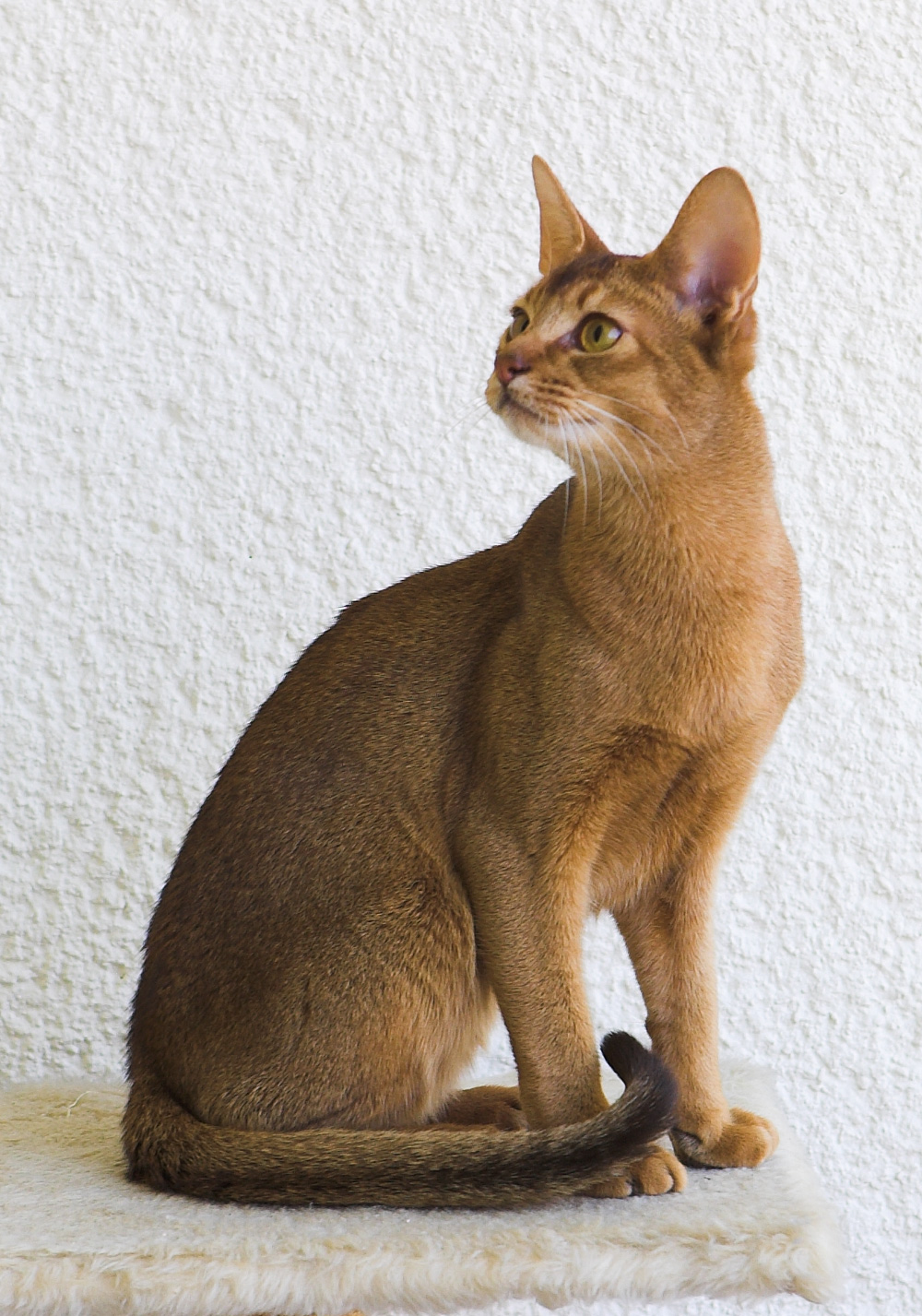
Second flush Darjeelings are the blue Abyssinians of tea: delicate, full of history, and slightly mysterious.  First flushes, then, are your typical ruddy: everything wonderful about the second flush, but with a relatable, worldly edge.  I prefer the muscatel intricacy of the second, but a strong first is an entirely different experience, and with all the hype 2011's Upper Namring's been getting, I had to try it out.
 
I wish the picture did justice to the color of the leaves of this one, because they're really quite nice: very green, almost like an oolong.  The liquor is lovely too, a bit darker than what I'm used to.  The aroma, from leaf to cup, is strong but unmistakably Darjeeling.  From start to finish, you know exactly what you're getting with this one.
The flavor kicks immediately.  There's no way to really explain Darjeeling until you've tasted it.  It's brisk, it's complicated, it's wild, it's refined.  The Namring has none of the muscatel taste prominent in second flushes, but it makes up for the absence in sheer volume and fullness.  It comes off almost a bit too harsh: it forces itself on your palate, and quickly takes over your entire mouth.  This is not a subtle tea in any way.  If you like Darjeelings but have always found them too delicate, this is the tea for you.
Personally, if I'm in the mood for a strong afternoon cup, I'd rather have a good Nilgiri.  This first flush is just a bit too much for me.  I like it, but it's too forceful for my taste.  I want this sort of kick in the morning, not at tea time, and Darjeeling just doesn't feel right to me before noon.  The astringency is a bit much to deal with as well; one has to expect a bit of a tight mouthfeel from Darjeeling, but the Namring almost makes my throat feel dry.  I'm not saying it's at all a bad tea -- on the contrary, it's quite good --it's just, at least for me, not quite what I need.

This one was going strong after two steeps, and I wouldn't be surprised if it lasted for three or four.  A bit about Namring Estate here (and an awesome blog to check out otherwise, if you're interested in this sort of thing).  A lot of people are selling 2011 Namrings; I got mine from TeaSource.   

-Ben "The Best" Tuthill

1/3/12

Tea of the week: Nonaipara Estate, 2nd Flush Assam (SFTGFOP1)

Welcome to our new section, Tea of the Week.  If I were to pick five things that were good, they would be cats, baseball, Berlin, FOOD JUSTICE, and tea.  Tea is the best drink in the world.  Some people compare tea to coffee: this is an okay comparison, but not really, because tea is very different.  It is healthier, subtler, and nicer to look at.  In the end, all coffee tastes essentially the same.  There are good beans, good roasts, good preparation, but ultimately it's all the same thing.  Am I right?  I don't actually know, I've never really had a full cup of coffee.  Sound off, coffee drinkers!

Anyway, tea is an incredibly varied, and, if it's good, intricately complex drink.  Wars have been fought over it, cultures have developed around it.  It is a drink with history, and that history continues to this day.  Tea: a cool thing to drink!

On Tea of the Week, we will profile a new strain of high grade tea every week.  This will be lots of fun, and I'm sure we will all learn something.  Get your strainers ready, people: we're off for a smooth ride!
BUT FIRST, A QUICK INTRODUCTION!

What is tea?  Some people think tea is anything that hot water is strained through.  My stupid friend Harry once said that coffee was a type of tea (he was wrong!!)!  In truth, tea is only one thing: a drink made from the leaf of the Camellia sinensis plant:
There are four common types of tea: black, oolong, green, and white.  All of them come from the same plant; the difference lies in how the leaf is prepared.

Black tea is highly oxidized (what does that mean?  Some help please, Chem majors!) leaves.  Black tea leaves appear dark, shriveled, and dry.  Black tea is the strong, dark, caffeinated drink most people associate with tea. 

Green tea is only minimally oxidized.  Green tea leaves are generally larger, and greener.  I don't like green tea and don't think about it very much.  It is a subtler, less caffeinated drink, and generally made from Chinese leaves.  People seem to think green tea is healthy; this is probably true.

Oolong tea is oxidized to a level between green and black tea.  As a result, it tastes like something between green and black tea.  I like it more than green tea and less than black tea.  I would call it the Joe Lieberman of teas, except not really.

White tea is very minimally oxidized, and made in a different process than green tea.  It is the most delicate tea, and maybe the most rewarding.  White tea leaves are big, full, and generally light colored.  If I were to describe white tea without fear of being beaten up by people who think describing tea is lame, I would call it delightful.

Unless you are dealing with people who are stupid/have more interesting things to think about, tea is generally referred to by the region where it was produced.  Some common tea regions are: Assam (known for strong, breakfast teas), Ceylon (aka Sri Lanka, known for light, almost citrus-y teas), Darjeeling (the Champagne region of teas), Keemum (a dark Chinese tea).  

Anything else that people call tea is not actually tea.  People often refer to some drinks as herbal teas, but usually they are neither herbs or teas.  If you want people to not like you, you can tell them that they are actually drinking tisanes.  I told this to my stupid friend Harry and he told me that to do something unpleasant and rude.  I felt sad but correct.  Common types of herbal tea are rooibos, or African Red Bush tea, chamomile, which is made from flowers, and some other things which are pretty obvious.  Herbal tea is nice but not that interesting.

If you find all of this fascinating as I do, you can check out the Wikipedia article on tea processing, which is filled with detailed information about how each type of tea is prepared. 

One last thing.  There are a lot of acronyms in the tea trade.  The one you will most commonly see is in reference to the tea's grade, or quality.  This is based around the Orange Pekoe system.  OP stands for Orange Pekoe, which means "standard, full leaf."  From that, we get things like:

BOP: "broken orange pekoe," standard leaves, but cheaper because they are broken.
FOP: "flowery orange pekoe," pretty good, longer leaves.
FTGFOP: "finest tippy golden flowery orange pekoe," or "far to good for ordinary people," the best, fullest leaves.
STGFOP1: "special finest tippy golden flowery orange pekoe 1," even better than the best.    

Anyway, there's a quick introduction.  Now let's talk about the Tea of the Week...

NONAIPARA ESTATE, 2nd Flush Assam (SFTGFOP1)
 I've been looking for a strong breakfast tea for awhile now, one with the complexity of a Darjeeling in addition to the solid maltiness one comes to expect from Assams.  I'm content with a simple Keemum, but I've been searching for an intricate Assam to compliment it.  The Khongea Estate strain of last year was incredible, but didn't have the heartiness I'm looking for in the early morning.  This 2nd flush Nonaipara, however, just might do the trick.
The Nonaipara doesn't have the thick, malty taste of a simpler Assam (such as Tao of Tea's competent Malty Assam), but it's undeniably hardy.  The rich smell of the unsteeped leaves are indicative of the flavor: this is a warm tea, filling without a harsh kick.  It isn't too astringent, and takes milk well.

What makes this tea truly extraordinary, however, is its sweet, almost chocolate undertones.  The smell of cocoa is prominent in the brewed leaves, and the taste comes through in the end of the sip.  It leaves a lingering richness, in many ways akin to that of a dark hot chocolate.  Without this undertone, this would be an unexceptional tea, fairly simple and not even notably malty.  However, the strength of its cocoa aroma and taste makes it an interesting addition to anyone's breakfast selection.  I don't see it becoming a staple of my collection, but I could hardly think of a more pleasurable tea for this time of year.
This tea is good for two steeps, but begins to loose flavor by the third.  You can purchase it from the TeaSource online store, or, if you're in the Twin Cities, pick up a bag from their store in Highland Village.  There doesn't seem to be much information about Nonaipara Estate, except that they seem to have a bit of an elephant problem.  I can't really relate.


-Ben "The Best" Tuthill